
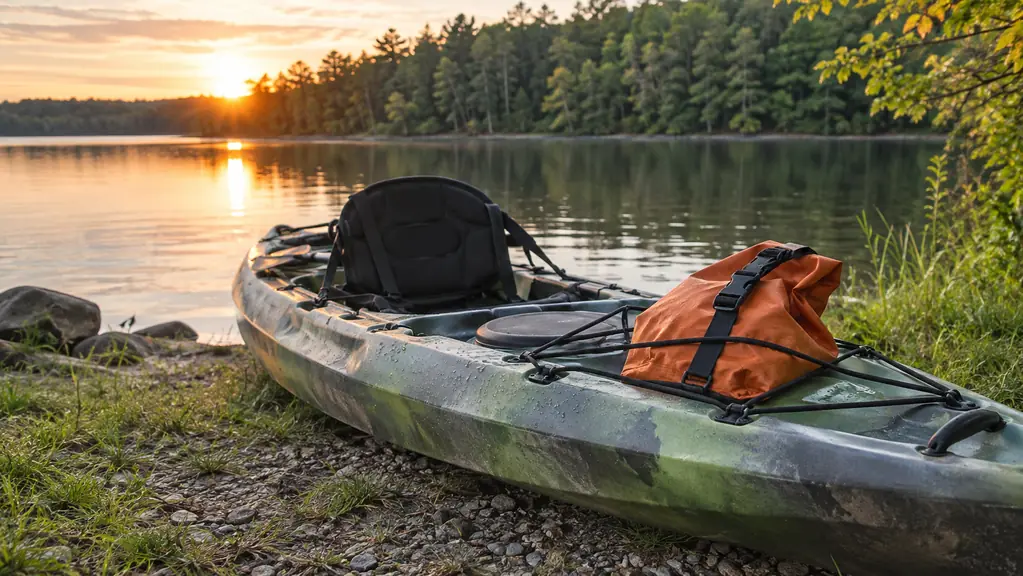
Sheila and I put in at the same gravel lot on Claytor Lake about twice a month from April through October. She carries a plain roll-top dry sack, one tube of coated fabric with a fold and a clip at the top. I carry a HEETA dry bag, the 5 liter size, clipped to one of the strap points on the deck of my kayak. Both bags keep the water out. Both have ridden in the bed of my Tacoma more times than I can count. Two years in, I can tell you which one I would buy again, and I can tell you the one job the other one does better. It is a shorter list than you would think.
Short answer first, because I know why you are here. For a day on a lake, the HEETA is the easier bag to live with. It is see-through, it has an adjustable strap and a side handle, and I can put my hand on my keys without dumping everything out on the seat. A plain roll-top sack is the better overflow bag, the one you bring when you want to carry a change of clothes and a fleece, because it swallows more and folds flat when it is empty. Neither one is a bad piece of gear. They answer different questions, and only you know which question you are asking.
| HEETA Dry Bag (5 liter) | Plain Roll-Top Dry Sack | |
|---|---|---|
| Capacity as I own it | 5 liters, 8 by 8 by 13 inches. Phone, keys, wallet, towel and a sandwich. | A bigger tube. Takes a change of clothes, a towel and shoes with room to roll twice. |
| Closing | Rolls down and fastens with a buckle | Rolls down and clips at the top |
| Finding your keys | See-through body. You look down and there they are. | Opaque. You feel around or you empty it. |
| Carrying down to the ramp | Adjustable strap and a side handle | Carried by the rolled top, or wedged under a bungee |
| Between trips | Holds a bit of shape, hangs on a nail in the garage | Folds to the size of a folded shirt and disappears into a hatch |
| Water resistance | Waterproof PVC, 0.6 mm at the bottom and 0.3 mm on the sides | Waterproof when it is rolled three times and clipped |
| Best for | A day on the lake with a phone, keys and lunch | A full day of clothes and gear, or a second bag in the boat |
What Each One Actually Is
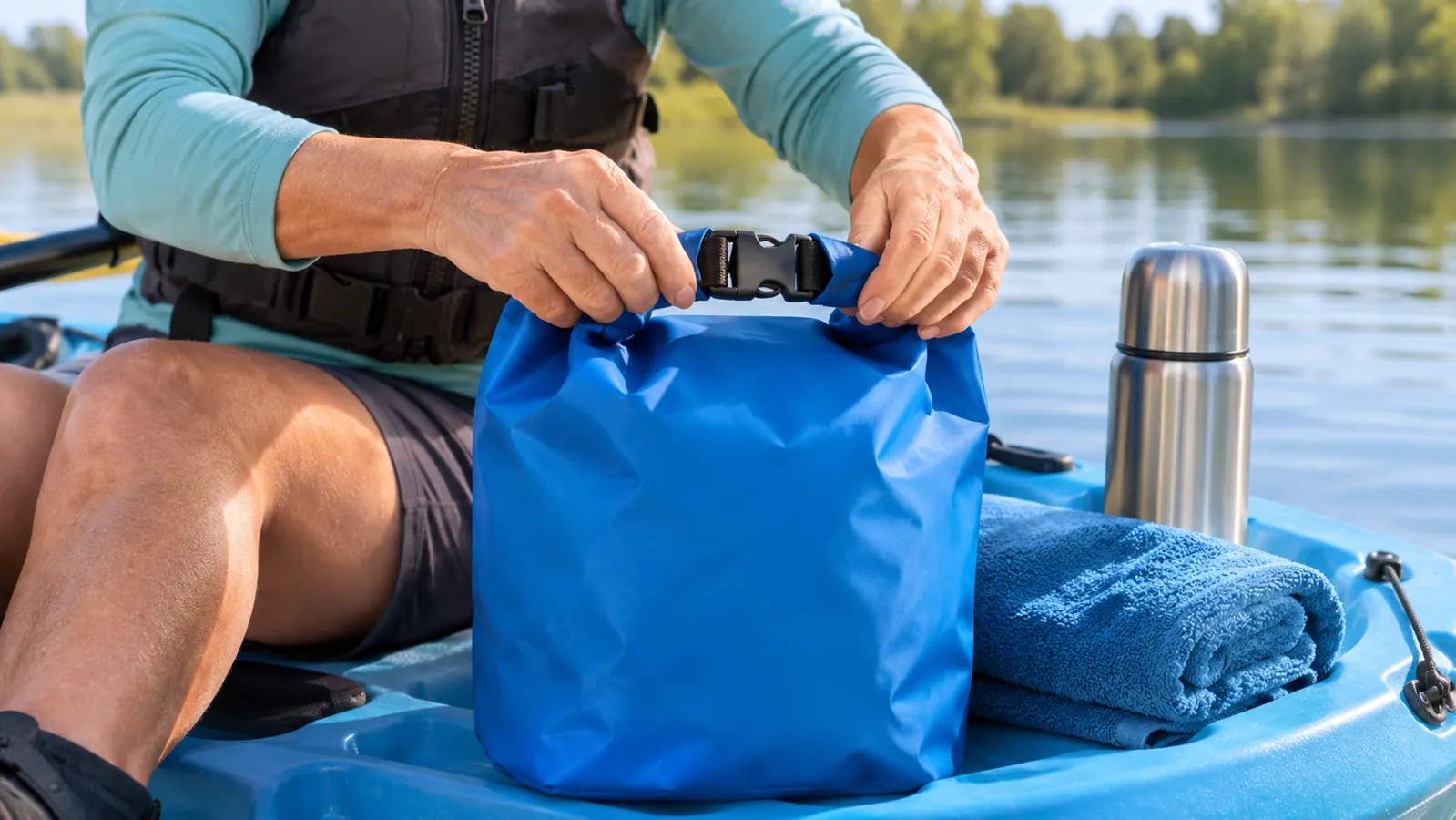
My bag is PVC, 0.6 mm thick at the bottom and 0.3 mm on the sides, 8 inches by 8 inches by 13 inches, and it rolls down at the top with a buckle. There are no pockets inside, just one open space. It has one adjustable strap and a side handle. HEETA makes the same bag in five sizes from 5 liters up to 40, and I deliberately bought the smallest one. I wanted something that would hold a phone, keys, wallet, a small towel and a sandwich and clip to the deck. I did not want something that would hold a week of clothes, because I am not out for a week.
Sheila's sack is a single tube of coated nylon, opaque, with no strap and no handle except the rolled top itself. It rolls down the same way mine does and clips the same way. Empty, it folds down to about the size of a folded t-shirt and goes under the deck bungee. Full, it takes a change of clothes, a towel and a pair of shoes and still rolls down twice.
That is most of the comparison right there. One is a small windowed box you strap to the boat. The other is a soft sack you stuff and forget about until you need it. Everything below is the detail behind that.
Where the HEETA Dry Bag Wins
The see-through body is why I bought it and why I would buy it again. I am 58 and I do not want to be patting down a dark tube of fabric in a boat that is moving a little, trying to work out whether the lump in the middle is my wallet or my sandwich. With mine I look down and I see everything at once. Phone, keys, the folded towel, the sandwich in its wrapper. On a hot July morning that takes about two seconds instead of a minute of guessing.
I noticed it the first week I had the bag. I had it packed and sitting on the workbench in the garage and I turned it over twice looking for my truck keys before it occurred to me to just look through the side of it. Thirty years of reaching into opaque coolers and lunch bags does that to a person. It has not happened again since.
The strap matters more than I expected it to. It is adjustable, it clips to the strap point, and the bag rides there all day without me thinking about it. When I walk down the launch, which on my lake is a couple hundred yards of gravel and then grass down to a concrete ramp, I sling the bag over one shoulder and carry the paddle in the other hand. Sheila's sack has no strap. She carries it by the rolled top or wedges it under the bungee and hopes. That sounds like a small thing until you are the one doing it with your hands full.
The third thing is the phone, and this one is personal. In June of 2024, before I owned any dry bag at all, I was using a zip sandwich bag inside a lunch cooler. Water got in anyway and my phone sat dead for two days before it came back to life. I remember that week better than I would like to. Now the phone goes straight into the bag, the bag gets rolled and buckled, and that is the end of the story. No pouch inside a pouch, no checking it twice from the middle of the lake.
Where the Plain Roll-Top Dry Sack Wins
Room, and there is no getting around it. My 5 liters will not hold a change of clothes and it will not hold a fleece. On a cool October morning I have wanted a dry layer waiting for me back at the truck and there was simply nowhere to put one. Sheila's sack takes the layer, the towel and her shoes and still rolls down twice. If your idea of a dry bag is the bag that keeps everything dry for a whole day, the sack is the right shape for that job and mine is not.
The morning I noticed the difference was the second week of October, cool enough that I had worn a fleece down to the ramp and paddled in just my shirt. Sheila had a dry fleece folded in her sack and put it on at the truck. I had a damp shirt and the heater. That is not a tragedy and I did not make it one, but I have thought about it more than the situation deserved.
It also folds down to almost nothing, and it is nobody's business what is in it. Mine is see-through, which means the whole boat knows I packed a sandwich and a towel. I do not care, but plenty of people do, and if you would rather not advertise your lunch to three strangers at a ramp, an opaque sack solves that for free. It also takes up no room at all in the truck between trips, where mine has a bit of body to it and lives on a nail in the garage instead of in a hatch.
Water got into my lunch cooler in June of 2024 and my phone sat dead for two days. That is the entire reason I own a dry bag at all.
The bag I clip to a deck strap point every single trip
5 liters, a roll-down top with a buckle, one adjustable strap and a side handle, and a body you can see through so you are not digging blind. It is the size I would buy again and the size I have used since July 2024.
Amazon Check Today's Price on Amazon →A Normal Morning With Both Bags in the Truck
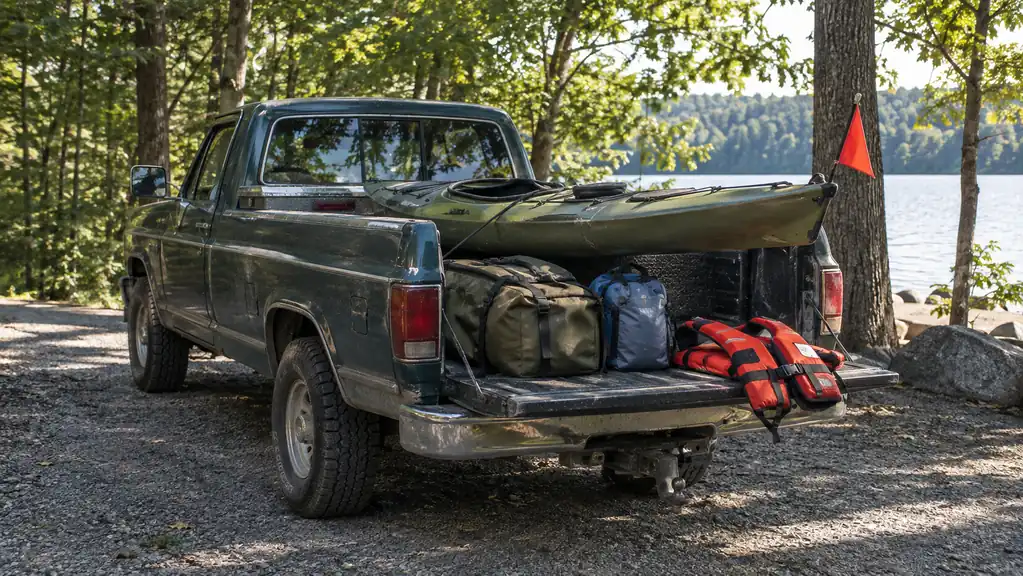
Packing at home is the same every time. The seat and the paddle go in the truck bed beside the kayak, the folded cart goes behind the seat, and the vest and the dry bag go on the passenger seat. Ron asks where I am going and when I will be back, and I tell him. That is the whole routine and it has not changed in two years.
At the lot I put the vest on before I unload anything. Then the kayak comes off the truck, the cart goes under it, and the bag gets clipped to the deck strap point. Sheila pulls in beside me and does the same thing with her sack, except hers goes under the bungee because there is no strap to clip. She has never once complained about it and I have never once seen her lose anything out of it. That is worth saying plainly. The sack is not a bad piece of gear. It is a plainer one.
Coming back in, everything gets rinsed with the garden hose and hung to dry in the garage. The bag hangs on the same nail as the vest, empty, top open. Nothing is ever stored wet. Two years of that and it still rolls down and buckles the way it did the first week I had it.
I set the hose on a low spray so I am not blasting the fold, then open the top wide and hang it by the strap. If the inside got any damp at all, I leave it open overnight and shut it the next morning. In two years I have never had to turn it inside out or wipe it down.
What I Do Not Like About My Bag
Five liters is small and I knew that when I bought it. It will not hold a change of clothes. If the day turns cold or wet, I am relying on what I wore to the ramp, and there have been mornings I wished otherwise. That is a real limitation and I would rather tell you about it than pretend the bag is bigger than it is.
And it is see-through. Everyone can see what is inside. Two years in, that has cost me exactly nothing, but it is the first thing anyone says when they pick it up, and if that bothers you, it will bother you every trip.
Two Years of Rinsing and Hanging It Up
I am not gentle with gear, but I am consistent with it. Hose, hang, dry, put it away. The bag has spent two years clipped to a deck in the sun and it has not cracked at the fold or gone stiff. The buckle still snaps. The strap still adjusts. I have not had to do anything to it beyond rinsing it. The strap has been over my shoulder on that gravel walk a couple hundred times now, and the stitching at the clip has not started to fray. I still check it, mostly out of habit. The bottom, which takes the wear, has no thin spots.
That is not a dramatic story, and I know it. But it is the honest one. A dry bag does not need to be exciting. It needs to be closed when you think it is closed, and it needs to still be closed two years later.
Who Should Buy Which
Buy the HEETA if you want a small bag that lives on the deck, holds your phone, keys, wallet, a towel and lunch, and lets you see what is in it without stopping to dig. That is exactly what I do with mine, twice a month from April through October, and it has been the right call for two years running.
Buy a plain roll-top sack if you need volume, if you want a bag that folds flat into a hatch, or if you would rather not have the whole boat know what you packed. It will keep your gear just as dry as mine. It will just make you work a little harder to find things. And if you already own a sack that is doing the job, you do not need to replace it. I would not have bought mine at all if that cooler had kept the water out.
One last thing before you get on the water. Whatever you pick, roll the top down at least three times and check the clip before you push off. That is the part that keeps your phone alive. It is not the name on the side of the bag.
One bag, one strap point, two years of dry gear
If you want the deck bag that lets you find your keys without stopping, this is the one that has been on my kayak since July 2024. Roll it, buckle it, clip it, go.
Amazon See the HEETA Dry Bag on Amazon →