
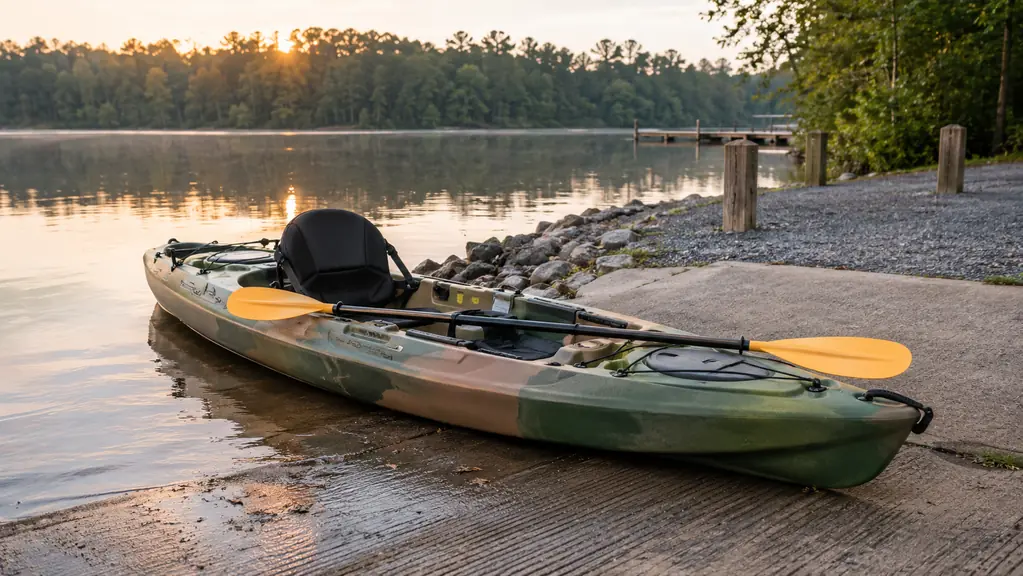
The paddle that came with my used kayak was a short, heavy thing, and I did not know enough back then to know it was a problem. I bought the kayak from a neighbor in the spring of 2023, the year I retired, and the paddle came with it. I used that paddle for two seasons on Claytor Lake. By the end of a two hour morning my right shoulder would be telling me about it on the drive home. I gave it back to the neighbor the next spring and bought the OCEANBROAD kayak paddle in March 2025. Twenty months later I still take that same paddle out about twice a month from April through October.
I am 58. I drove a school bus and then dispatched buses for the county until I retired, and I paddle a 10 foot sit-on-top that weighs about 50 pounds. My friend Sheila is 60, she has paddled longer than I have, and she comes along when our schedules line up. My husband Ron does not paddle. He gets told where I am going and when I will be back, and then he stays home. Everything I do here is flat water. Claytor Lake mostly, and the calm stretch of the New River above Radford on days when the water is friendly. No whitewater, no surf, no overnight trips. I am not an instructor and I am not going to dress this up as a technical review. It is one woman's report on one paddle after a good while of using it.
The Quick Verdict
Light enough to carry down the launch walk in one hand, comes apart for the truck bed, and has not given me a single problem in 20 months. The alloy shaft is cold on April mornings and heavier than Sheila's fiberglass paddle. Neither has ever made me want something else.
Amazon Check Today's Price →The paddle that stopped my shoulder from talking to me on the drive home
Aluminum alloy shaft, fiberglass reinforced blades, 230 cm, about 2.5 pounds, and it comes apart into two sections for the truck bed. This is the one I bought with my own money in March 2025 and still carry every trip.
Amazon Check today's price on Amazon →How I've Used It
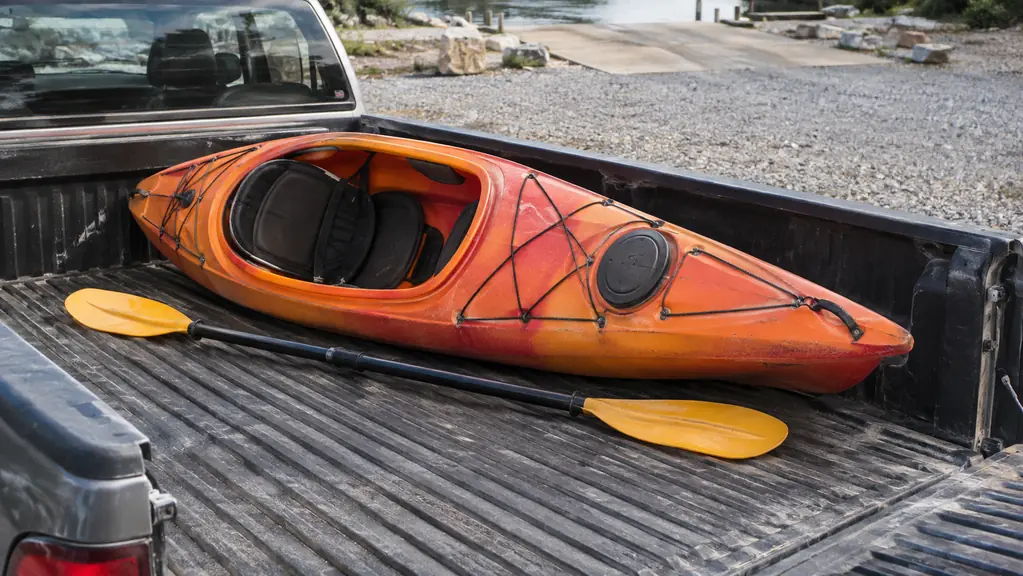
My season runs April through October, about two trips a month, always in daylight. The launch I use has a gravel lot and a walk of a couple hundred yards down to the water, part gravel and part grass, finishing at a concrete ramp. The paddle rides in the truck bed beside the kayak, taken apart into its two sections, in the back of an older Toyota Tacoma. It is about the last thing I put in and the first thing I lift out.
At the ramp I put my vest on before I unload anything. Then the kayak comes off, the seat goes on, the two halves of the paddle go together, and the dry bag gets clipped to a strap point on the deck. From there it is me, the paddle, and roughly three hours of flat water. I am not a fast paddler. I go out, I look at the herons, I come back. The paddle is in my hands that whole time, which is the only test that matters and the only one I can honestly give you.
Wind is the one condition that changes the morning, and I want to be straight about my limits. On a breezy day the paddle does what I ask and the boat goes where I point it. I cannot tell you about catch or flutter or any of the technical words, because I do not paddle hard enough or far enough to find out. If that is the review you need, I am the wrong woman. What I can tell you is that nothing about the paddle made a windy morning harder than the wind already made it.
After a trip it gets rinsed with the garden hose along with everything else and left to dry in the garage. Between trips it stands in the corner in its two sections. That is the whole routine. No wax, no oil, nothing sprayed on it. Twenty months in, that routine has not caused a single problem and the paddle has not asked for anything more than a rinse.

What 2.5 Pounds Feels Like After Two Hours
The listing says 2.5 pounds and I believe it. What that number means in practice is that I can carry it down the launch walk in one hand with the dry bag in the other and not think about it twice. The paddle I gave back to my neighbor was heavier and shorter, which sounds like it should have been the easier one, and it was not. A short paddle puts you at an awkward angle and you pay for it in your shoulder. The extra length does more for me than the extra ounces cost me.
Sheila paddles with a fiberglass paddle and hers is lighter than mine. I tried it for one afternoon on Claytor Lake, and yes, it is lighter. No, it did not change my morning. I am out there for three hours and I am not racing anybody. If I paddled six hours at a stretch, or paddled every week, I would probably care about that difference the way she cares about it. At two trips a month the extra weight is a fact I notice once, at the truck, and then forget about entirely.
The thing I do notice, and I notice it every April, is the shaft. Aluminum is cold in a way plastic and fiberglass are not, and on a 45 degree morning it is the coldest thing I touch all day. I warm my hands on the truck heater before I make the walk down and that handles most of it. By May it is a non-issue and I forget I ever thought about it. The shaft has a tube cover on it that helps a little when my hands are wet, though I could not tell you what it is made of without going back to the listing.
The blades are fiberglass reinforced and they have held their shape. I have pushed off gravel and bumped the concrete ramp more times than I want to admit, and the edges show the scuffs to prove it. Scuffs are cosmetic. Nothing has cracked or chipped or come apart, and I have never once had to stop and look at a blade to see whether it was still all right.
The Three Locking Positions and the One I Use
The paddle comes apart in the middle and the joint has three locking positions, so you can set the blades at different angles to suit how you paddle. I set mine in one position in March 2025 and it has stayed there ever since. That is not a knock on the other two settings. It is just that once a thing feels right in your hands, you stop fiddling with it.
I did try the other two settings, on a calm morning in that first month. One of them had me cocking my wrist in a way I did not like at all. The other one was fine but not better than the setting I had started with. So back it went and there it has stayed. If you have a stronger opinion about blade angle than I do, the three positions are there for you and they lock up solid. I have never had the joint slip or work loose while I was on the water.
The joint is the one place on this paddle where a little care pays you back. The lot I launch from is gravel and grit gets into everything. I knock the two halves against my palm before I put them together, and I rinse the joint along with the rest of the paddle when I get home. That is four seconds of my life and it is the only extra thing I do.
Two Sections, One Truck Bed, and the Leash
At 230 cm, or 90.5 inches, this paddle is a fair bit taller than I am, and it would not lie neatly across a truck bed without hanging out over the end. Taken apart it is two short pieces that lie flat beside the kayak and do not slide around on the drive. That is the whole reason I wanted a two-piece in the first place. It also means the thing would fit in the back seat of a car, which matters if your next vehicle is not a pickup.
It came with a leash and I use it. Not for anything dramatic. I set the paddle down on the deck when I am getting settled, or when I stop to eat a sandwich, and the leash means it stays where I put it instead of sliding off into the water while I am reaching for something else. It clips to a strap point and takes a second to attach. If you have ever watched a paddle drift away from a kayak you know exactly why I bother.
The length was the part I got wrong in my head before I bought. I am 5 foot 5 and I paddle a 10 foot sit-on-top, which is not a wide boat. I spent a while worrying that 230 cm would be too much paddle for me. It was not. It sits comfortably across my lap and my hands fall where they should without me reaching. If you paddle a wider boat or you are much taller than I am, OCEANBROAD makes this paddle in other lengths and the listing tells you which is which.
What Has Held Up and What I'd Change
Twenty months, about twice a month, April through October. Everything I have described is still true. The joint locks. The blades are whole. The cover on the shaft has not peeled or split. The leash still clips and the two halves still go together the way they did the first morning. Nothing has been replaced, repaired, or sent back, and nothing has needed to be.
What I would change is the weight, and I would only change it if it did not cost me anything. A fiberglass shaft is lighter and I know it. I also know a fiberglass paddle is the more expensive kind, and I was not going to go there on my second paddle ever. So I bought the OCEANBROAD, I noticed the extra ounces for about a week, and I have not thought about them since.
The other thing I would tell you before you buy is that the shaft is cold metal in a way fiberglass is not. If you paddle in Virginia in April, you will notice it for the first twenty minutes of your morning. If you paddle somewhere hot in July, you will never think about it. That is the whole drawback. It is a small one and a warm truck cab solves it.
Twenty months, two sections, three settings, and I have never once thought about the joint while I was out on the water.
What I Liked
- Light enough to carry down the launch walk in one hand
- Breaks into two sections that lie flat in a truck bed or a back seat
- Three locking positions, and the joint has never slipped on the water
- The included leash keeps it on the deck when I set it down
- 230 cm suits a 10 foot sit-on-top and a 5 foot 5 paddler
Where It Falls Short
- The aluminum shaft is cold on April mornings
- Heavier than a fiberglass paddle
- Gravel grit works into the joint if you do not knock it out
- Blade edges scuff quickly if you push off concrete or gravel
- The three settings are wasted on me, since I only use one
Who This Is For
Recreational paddlers on flat water who want one paddle and do not want to think about it again. If you get out a couple of times a month on a lake or a calm river, if you drive a truck or a car with a back seat, if you can carry 2.5 pounds in one hand down a ramp, this paddle does the job and asks nothing of you afterward. It does not need to be babied, it does not need to be maintained, and it does not need you to know anything about paddle design.
It also suits anyone who bought a used kayak and got a sad paddle thrown in with it, which is exactly the spot I was in. That short heavy paddle is what most used boats come with. Replacing it made a bigger difference to how a morning felt than anything else I have changed on that kayak, and I say that having changed a few things since.
Who Should Skip It
If you paddle long distances, paddle several times a week, or care about shaving weight, buy a fiberglass paddle and pay what it costs. Sheila's is lighter and she is right about that. If you want a one-piece paddle and have no intention of ever breaking it down, then the two-section joint is a feature you are paying for and not using, and a one-piece would suit you better.
And if you have a shoulder or a back that has been giving you trouble, talk to a doctor before you take anyone's word about a paddle, mine included. I am a retired bus dispatcher who paddles a lake twice a month. I am not qualified to tell you what your shoulder can handle, and I would not want you to think otherwise.
Two trips a month for 20 months, and it is still the only paddle in my garage corner
Aluminum alloy shaft, fiberglass reinforced blades, 230 cm, three locking positions, two sections, leash included. Today's price is on the listing.
Amazon Check today's price on Amazon →