

I bought the Onyx MoveVent Dynamic paddle vest in May 2025, about eighteen months ago, and I have worn it on every single trip since. That is not a sentence I could have written about the life jacket that came with my kayak.
The old one was a blocky general purpose foam jacket. There was nothing wrong with it exactly. It was built for somebody sitting still in a boat with a motor on it, and I am not that person. My kayak is a used 10 foot sit-on-top I bought from a neighbor in the spring of 2023, the year I retired from dispatching buses for the county. It weighs about 50 pounds and it has a seat with a backrest on it. The old jacket pushed against that backrest every time I leaned back, and it rode up around my ears until I felt like I was wearing a neck brace. On hot days I did the thing I am not proud of. I took it off and shoved it under the deck bungee.
That habit ended in May 2025. The Onyx is not a fancy piece of gear. It is cut for paddling instead of sitting, and that turned out to be the whole difference.
The Quick Verdict
Cut for paddling instead of sitting, comfortable enough that I stopped noticing it, and still warm on a Virginia afternoon in August. Eighteen months in, I would buy it again.
Amazon Check Today's Price →The vest I have not taken off on the water since May 2025
Coast Guard and Transport Canada approved, mesh back panel, adjustable side belts and shoulder straps. Check today's price before your next trip.
Amazon Check Today's Price on Amazon →How I've Used It
I paddle Claytor Lake and the calm stretch of the New River near Radford, Virginia. Two trips a month, April through October, always in daylight. That is not much by the standards of somebody with a roof rack and a trailer and a group of friends who go every weekend. It is what fits around my husband Ron's schedule and mine, and eighteen months of it is enough to know what a piece of gear does and does not do.
The launch I use has a gravel parking lot and a walk of a couple hundred yards down to the water, part gravel and part grass, ending at a concrete ramp. My routine has not changed since the year I bought the kayak. Seat and paddle in the truck bed beside the boat, the folded cart behind the seat, the vest and the dry bag on the passenger seat. I put the vest on in the parking lot, before I unload anything.
One trip I remember as a fair test was a Saturday last September. Sheila, my friend who is 60 and paddles her own kayak, and I put in around eight in the morning with the lake flat and the air cool enough for a long sleeve. We were out about two and a half hours. The vest never came up in conversation, which is how I judge gear now. The seat and the cart and the paddle all got complained about at some point. The vest did not.
That last part is the change. With the old jacket I would carry it down and put it on at the ramp, because wearing it for that walk was miserable. With the Onyx I put it on at the truck and leave it on. Down the hill, onto the water, back up the hill, off in the parking lot at the end. Eighteen months of that and I have not once taken it off while I was floating. That is the short version of this review. Everything below is why.
The Mesh Back Is the Reason It Works in a Sit-On-Top
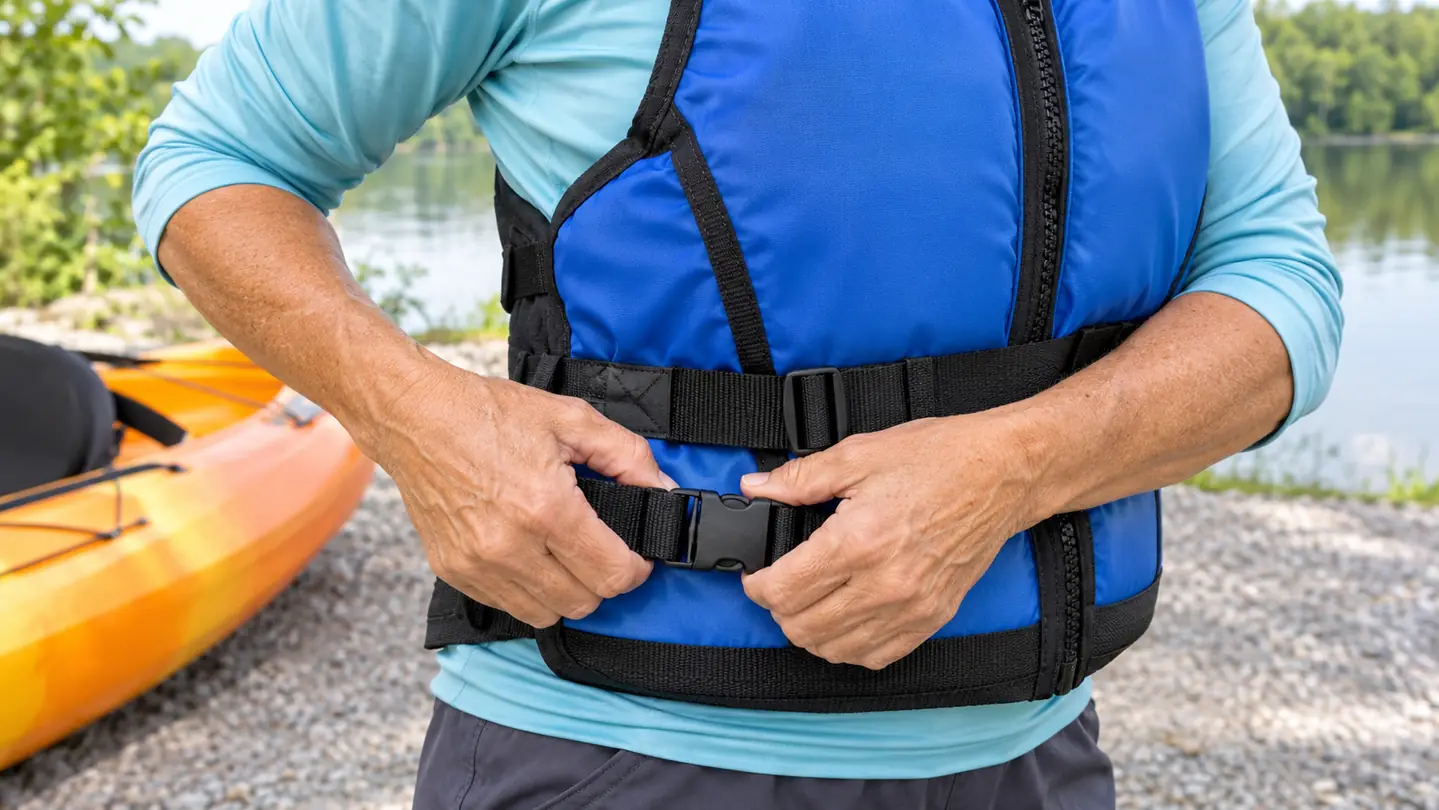
The back of this vest is a mesh panel, and Onyx says plainly that the point of it is to accommodate canoe and kayak seats. That is the feature that solved my problem, so I want to explain what it actually does rather than just repeat the bullet point. The backrest on my seat sits against that mesh instead of shoving a slab of foam forward. The vest stays down where I put it. I lean back to stretch between strokes and nothing climbs up my chest.
The other half of it is the armholes. They are cut large, wide enough that my arms come forward for a stroke without the vest dragging at my shoulders or rubbing underneath. My old jacket had tight armholes, and by the end of an hour my shoulders were tired in a way that had nothing to do with paddling. I noticed that difference on the very first trip, before I had even adjusted anything.
Those two things together are why I call this a paddling vest and not a life jacket, which is how Onyx labels it too. A general purpose jacket is designed to float a person who is not moving much. A paddling vest is designed to float a person who is moving their arms all afternoon. Once you have used the second kind, the first kind feels like wearing a cooler with straps on it.
I will add one thing about the walk down. Because the vest sits where it should, I am not hitching at it with the hand that is holding the cart handle. On gravel, with a kayak that wants to tip if it is not centered, both hands matter. That sounds like a small thing. It is not a small thing when you are 58 and doing it alone.
I can also tell you what a difference it makes when it is absent. I still have the old jacket in the garage. In September I put it on in the driveway, out of curiosity, just to see whether my memory had exaggerated. It had not. Two minutes of standing there and it was already sitting higher on my shoulders than the Onyx ever does while I paddle.
Getting the Straps Right Took Me Three Trips
This is the part I would tell a friend at the boat ramp, because nobody told me. The vest has adjustable side belts and shoulder straps, with neoprene at the shoulders. Out of the box it is set for a body that is not yours. It took me three trips to get it where I wanted it, and I want to be honest about that so you do not judge the vest by trip number one.
First trip I had it too loose, because I was afraid of feeling clamped in. It shifted when I leaned to reach behind me for the dry bag. Second trip I overcorrected and pulled everything down tight, and by the time I came back up the ramp I was ready to be out of it and my shoulders ached. Third trip I went out with a plan. Shoulder straps first, then snug the side belts, then sit in the kayak on dry land and lean back against the seat to see whether anything moved.
That was the trip it became mine. I have not touched the straps since, other than a small tug when I put it on over a heavier shirt in April.
The neoprene at the shoulders is part of why I kept at it. On the second trip, with everything pulled down tight, that neoprene was the only part that stayed comfortable. No chafing where the straps cross the top of the shoulder, even in a short sleeve shirt with sunscreen on. The tight spots were all in the belts at my waist, where I had simply overdone it.
Three trips is not a complaint. It is the truth about adjustable gear, and I would much rather have straps I can set than a vest that either happens to fit or does not.
Eighteen Months of Hose Water and a Nail by the Door
I do not baby my gear. After every trip I rinse the vest with the garden hose, hang it on a plastic hanger on a nail by the garage door, and leave it there. Nothing else. No spray, no soap, no special hanger. It is nylon with foam inside, and it does not ask for more than that. Nothing is ever stored wet, and by the next morning it is dry.
One thing I have learned about hanging it: give it room. The first month I hooked it on the nail right up against the garage wall, and the panel that had been against my back stayed damp until the next morning. Now it hangs with a few inches of air on either side and it is dry by evening. That is the entire maintenance routine. Rinse, hang, forget.
Eighteen months later the buckle still snaps the way it did in May, the zipper still runs clean, and I cannot find any cracking in the shell. It weighs 1.7 pounds, light enough that I forget I am wearing it and substantial enough that I believe it would do something if I needed it to. Onyx gives it a one year manufacturer warranty. I am past that now and have never had a reason to use it.
Two small things I did not expect to care about. There is a built-in whistle, which I have never blown and am glad is there. And there are reflective accents on it, the proper kind, not a decorative stripe. I paddle in daylight, but a gray morning on Claytor Lake is a gray morning, and I would rather be seen by somebody backing a trailer down a ramp.
I also read the label when it arrived, because I am the kind of person who reads labels. It is approved by the U.S. Coast Guard and by Transport Canada. That is not a reason to pick one vest over another, since most of them carry it. It is a reason not to lie awake wondering.
Where It Still Falls Short in August
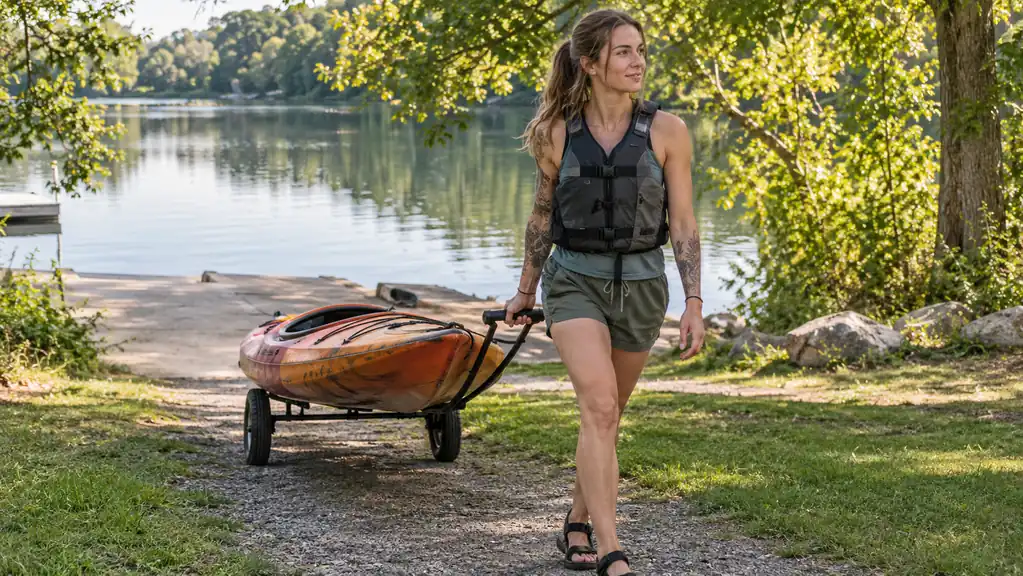
It is warm. I am not going to pretend otherwise. Foam is foam, and a vest that floats you is a vest with foam in it. The mesh back helps a great deal and the big armholes let some air move, but on a still afternoon in late July or August my back gets damp where the mesh sits against the seat. I keep it on anyway. That is the honest difference between this vest and the old one. The old one I took off. This one I do not want to take off, so I do not.
What I do now is plan around it. In July and August I go earlier, in the morning before the air thickens, and I take the vest off at the truck at the end, not at the ramp. I also keep a hand towel in the dry bag for the drive home. None of that is the vest being bad. It is August in Virginia, and the lake is the only cool thing in the county.
The other thing is sizing. The Medium-Large is built to cover a wide range, 90 pounds up to 300. That is convenient if you are buying one vest to cover a household, and it is why my neighbor asked me about it for her grandson. It also means the fit is not tailored to you, and if you sit near either end of that range, expect to spend more time on the straps than I did.
And if I am being picky, the shoulder straps need a tug when the seasons change, once in April over a thick shirt and once in June when I am down to a t-shirt. Five seconds, twice a year. Not a problem. Just not nothing.
What I Liked
- The mesh back panel lets my seat backrest sit where it belongs instead of shoving the vest up around my ears
- Large armhole openings, so the forward stroke does not drag or rub at the shoulders
- Adjustable side belts and shoulder straps plus neoprene at the shoulders, comfortable once you spend the time setting them
- Built-in whistle and reflective accents, neither of which my old jacket had
- Coast Guard and Transport Canada approved, 1.7 pounds, and dry again by the next morning
- The Medium-Large fit range of 90 to 300 pounds covers a whole household with one vest
Where It Falls Short
- Still warm on a July or August afternoon, the mesh helps but it does not make the vest cool
- Took me three trips to get the straps where I wanted them
- The wide 90 to 300 pound fit range means it is not tailored, so people at either end will work harder at adjustment
- Shoulder straps need a small tug when I change from a thick shirt to a t-shirt
Eighteen months, two trips a month from April through October, and I have never once taken it off while I was on the water.
Who This Is For
Recreational paddlers with a sit-on-top or any kayak that has a backrest on the seat. That is most of us, and the mesh panel is aimed squarely at that seat. It is for people who are tired of a jacket that rides up and who have quietly started leaving it off on warm days, which is a habit worth breaking. It suits anyone between 90 and 300 pounds who wants one vest that covers the household, and anyone who would rather buy once, hang it on a nail by the garage door, and not think about it again. If you paddle the way I do, twice a month on a lake and a calm river, this is more vest than you strictly need and exactly as much as you will want.
Who Should Skip It
If you paddle cold water, moving water, or long distances in serious conditions, you want a different class of vest entirely and a dealer who knows more than I do. If you are at the very low or very high end of that 90 to 300 pound range, get measured rather than guessing from a size letter. And if you are shopping for a vest that keeps you cool in August, this is not that. No vest is. This one is simply less bad at it than the one that came with my boat, and after eighteen months that has been enough for me to keep reaching for it every time.
If your jacket rides up against the seat back, this is the fix
Medium-Large, Coast Guard and Transport Canada approved, mesh back panel for kayak and canoe seats. Same vest I have worn on every trip since May 2025.
Amazon Check Today's Price on Amazon →