
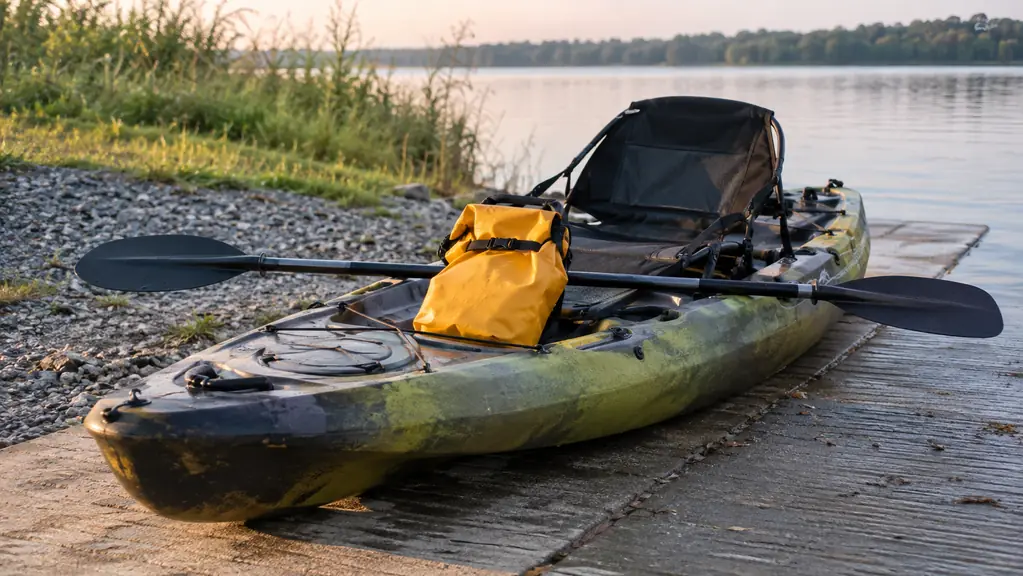
The worst thing that ever happened to my phone had nothing to do with the phone. It was June of 2024, Claytor Lake, and the phone was inside a zip sandwich bag, the sandwich bag was inside a lunch cooler, and the cooler was sitting in the bottom of my kayak. Somewhere between the ramp and the far bank, water found its way in. The phone went dark. It stayed dark for two days and then came back on by itself, which I took as a warning rather than a favor.
A month later I bought the HEETA dry bag in the 5 liter size for about what a tank of gas costs, and I have packed it the same way on every trip since. Two trips a month, April through October, on Claytor Lake and the calm stretch of the New River here in Radford. The bag is a plain thing. A roll-down top, a buckle, one adjustable strap, a side handle, and no pockets at all. What took me a while to understand is that the bag does not do the work by itself. How you load it and how you close it is what decides whether your gear comes out dry.
The bag that ended my sandwich bag era
The HEETA 5 liter holds a phone, keys, wallet, a small towel and a sandwich, which is the entire list. Load it, squeeze the air out, roll it down, click the buckle, clip it to the deck. Nothing inside mine has gotten wet since July of 2024.
Amazon Check Today's Price on Amazon →Five Steps, Same Order Every Trip
Step 1: Empty It Out and Decide What Actually Goes In
Five liters is smaller than it sounds, and the bag itself is about eight inches across and thirteen inches tall with one compartment in it and no pocket anywhere. So the first step is not packing. It is laying everything out on the tailgate and being honest about what you will actually use in four hours on the water.
Mine is the same list every trip. Phone, keys, wallet, a small towel, and a sandwich wrapped in wax paper. That is it, and it fills the bag to the point where the top still rolls down clean and the buckle meets without a fight. I measured it once out of curiosity, since the bag stands thirteen inches tall and eight across: the sandwich sits about a third of the way up the side, and the towel lays flat underneath and comes up the wall an inch or two. Everything else either has a home somewhere else on the kayak or it does not come with me.
The things that stay out surprise people. A change of clothes will not fit, and I stopped pretending it would. Sunscreen goes in the bag on the back of my seat. The water bottle rides under the deck bungee. If the forecast is bad enough that I want a rain jacket, I am not going out, because I paddle a ten foot sit-on-top on flat water and rain is not the trouble, wind is. And the phone goes straight into the bag. No second pouch, no case inside a case, nothing to lose track of at the ramp. The night before a trip I put those five things in a row on the shelf above the workbench, so the morning is picking them up rather than trying to remember them at seven o'clock with a kayak already in the truck.
Step 2: Load It in the Order You Will Reach for Things
With no pockets, order is the only organizing system you get. The towel goes in first, flat against the bottom, because I want it dry and I do not want it until I am back at the truck. The sandwich goes on top of the towel so it does not get sat on. The wallet slides down one side, pushed over against the wall so it does not ride on top of the towel.
The phone goes in last, and I had to learn that one. Put the phone in first and it ends up under everything, and there you are at the ramp with wet hands, digging. Mine rides near the top so I can put a hand on it without unpacking the whole bag. If I am meeting Sheila and I want to check the time, I check it before I load, not after. Checking it before also means I am not opening the bag out on the water for something that could have waited until the ramp.
One thing to know going in. The material is transparent, so whatever is in there is on display at the launch. I do not put anything in this bag I would not hold up in a gravel parking lot. The wallet goes in facing the hull and the keys go inside the folded towel. Not for theft, just for my own peace of mind.
Step 3: Get the Air Out Before You Roll It
This is the step people skip, and it is the one that decides everything. A dry bag with a pocket of air trapped in it will not seal cleanly. The air pushes back against the fold and works it loose while the bag sits on your deck, and you will not notice until you open it at the truck and find a half inch of water sitting on your towel.
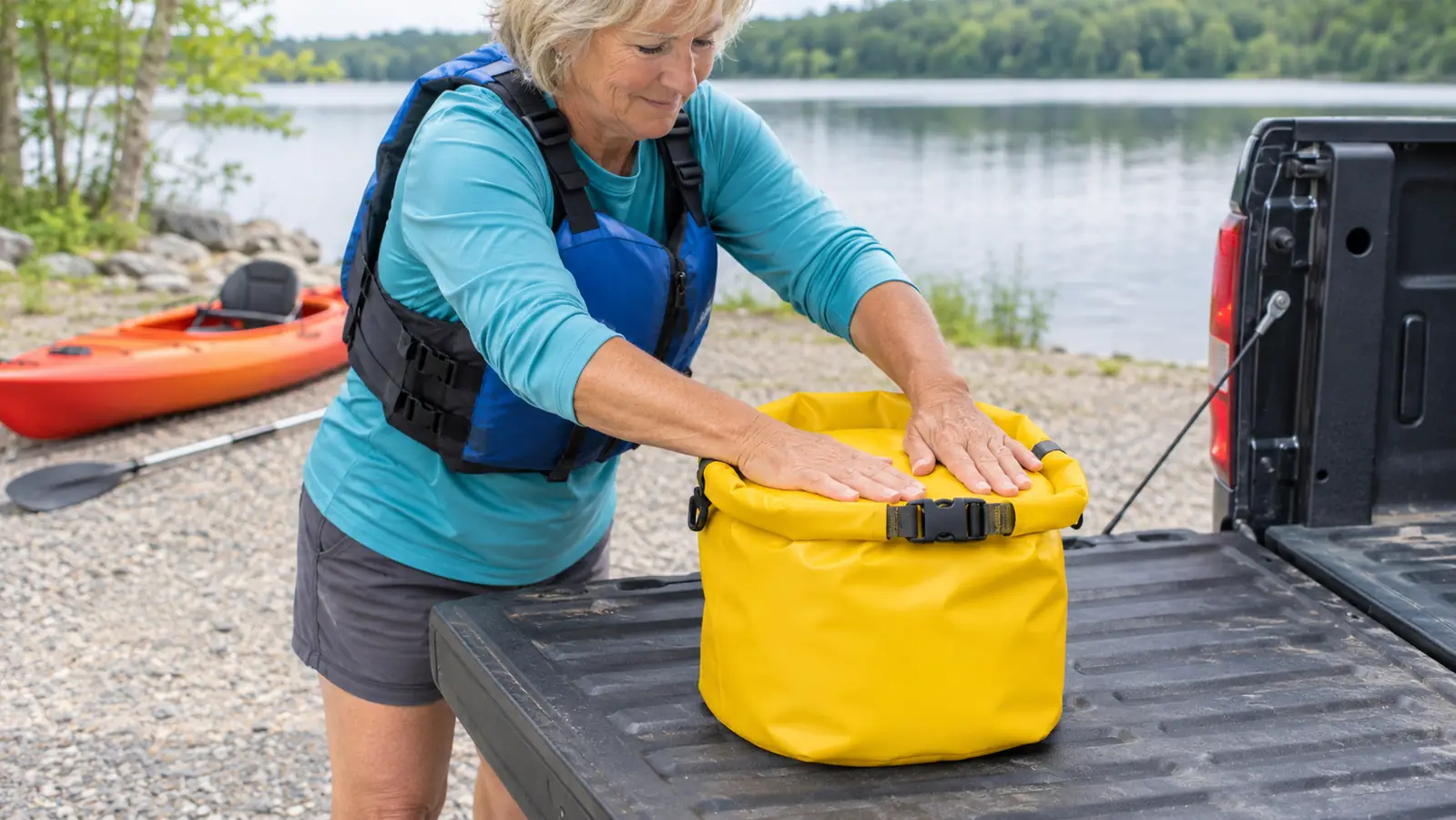
So before anything gets rolled, I lay the bag on its side and press from the bottom up, pushing the trapped air toward the open top the way you squeeze toothpaste toward the cap. Then I gather the top edges together and press the flat of my hand down on it until the bag goes soft. You will feel it happen. The material stops fighting you and stays where you put it.
Thirty seconds, maybe. That is the whole step. The first time I loaded the HEETA in July of 2024 I skipped it, and the bag felt firm and puffy in my hands, like a half inflated pillow. The top only rolled twice before the buckle halves met. I unrolled it right there on the tailgate, pressed the air down toward the opening, and it rolled three times without any argument. It is the difference between a bag that actually closes and a bag that looks closed, and that difference is a phone that works and a phone that spends two days dark.
Air is the part nobody mentions. Squeeze it out and the bag closes. Leave it in and the bag only looks closed.

Step 4: Roll the Top Down Three Times and Buckle It
Fold the top over firmly, the full width, and press the crease down with your thumb. Do it again. Do it a third time. Three folds is what mine takes, and with the bag loaded the way I described, the two buckle ends meet comfortably at three. That rolled section comes out about three inches deep, and it is what keeps water from walking down the sides and into the opening. The material is a heavier sheet at the bottom than on the sides, so the base sits square and does not slump, which is why I fold from the top down and leave the bottom alone. If you have stuffed it so full that you only get one fold, take something out and start over. One fold is not a seal, and it does not become one because the buckle clicked.
Bring the two halves of the buckle together and press until it clicks. Then give the roll a tug. If the fold slides under your hand, it is not tight enough, and the fix is to unroll it, straighten the top edges, and do it again with the material square.
Before the bag goes anywhere near the water, I turn it upside down over the tailgate and shake it. That is not a real test of anything. But if a fold is going to let go, I would rather it let go while I am standing in a parking lot than out past the far bank with the wind picking up.
Step 5: Clip It to the Deck and Set the Strap Before You Push Off
The strap is adjustable and there is a side handle, so there are two ways to carry it, but on the water I want my hands free. I clip the strap to a deck strap point in front of the seat, close enough that I can reach it without turning around. My kayak has four strap points on the deck where the seat clips in, and I use the forward one for the bag because it keeps the strap short and keeps the bag where I can see it.
Then I shorten the strap until the bag lies flat against the deck and does not swing. A bag swinging against a hull makes a knocking noise every stroke, and it works the clip loose over an afternoon. Mine sits still enough that I forget about it for an hour at a time.
Last thing before I push off, a hand on the bag to check the clip and a hand on the vest to check the buckle. That is the whole routine. It costs less time than walking back up that couple hundred yards of gravel and grass to the truck for something I left behind.
What Else Helps
The bag handles a small part of the trip, and the rest is the equipment that keeps me from making two trips up a gravel hill. The Bonnlo cart is the one I should have bought first. I set the kayak on it in the lot, hold it down with a cam strap I already owned, and roll the whole thing to the ramp by myself instead of waiting on Sheila to take the other end. The solid tires jolt over the gravel, and if the kayak is not centered it wants to tip, but it beats dragging the hull by the bow handle.
The Pactrade seat gets the small things that will not fit in the bag. Sunscreen and a spare hat go in the bag on the back of it. The straps need a tug after the first half hour and the padding is still damp the next morning, but my lower back stopped complaining after about an hour, which is more than I could say for the molded seat with a garden kneeling pad on it.
The Onyx vest has nothing to do with packing and everything to do with the trip. I put it on in the parking lot before I unload and it stays on the whole time I am on the water. It comes off after the kayak is back up on the cart, and I have never once paddled without it. The OCEANBROAD paddle comes apart into two sections and lives in the garage corner. None of that is in the bag. That is the point. The bag holds what has to stay dry, and everything else has its own place.
Sheila carries an opaque nylon roll-top sack instead of a transparent bag, and I have handled it on the water. It is a good sack and it does the same job. I like being able to see where the phone is without opening anything, and she likes that nobody can see her wallet. Neither of us is wrong. For what it is worth, the HEETA hangs on the same nail as the vest at home, empty and open. After every trip it gets a rinse from the garden hose with everything else, and nothing else is done to it. No sprays, no wax, no repairs. Two years of that and the roll still seals.
Five liters, one strap, and a phone that still works at the end of the day
If your phone currently rides in a sandwich bag inside a cooler, this is the upgrade. Load it, press the air out, roll it three times, buckle it, clip it to a deck point. That is the whole method, and it has held on every trip since July of 2024.
Amazon Check Today's Price on Amazon →