
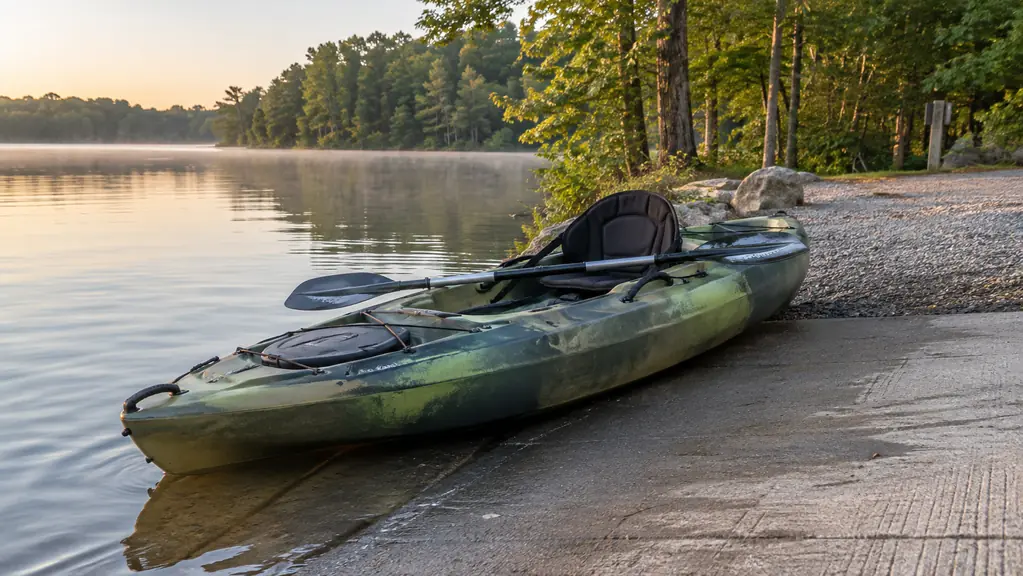
The first hour on Claytor Lake was never the trouble. It was somewhere after that, when my lower back started to stiffen and I began shifting around like I was sitting through a long church service. I would paddle a few strokes, lean forward, lean back, then turn the kayak toward the ramp while Sheila was still working the far bank. Two seasons of that and I was leaving the kayak in the garage more weekends than I was taking it out.
My kayak is a used 10 foot sit-on-top I bought from a neighbor in the spring of 2023, the year I retired from dispatching buses for the county. It weighs about 50 pounds and it came with a molded seat, which is really just a shape pressed into the plastic with nothing behind it. For two summers I laid a folded foam garden kneeling pad on that seat and told myself it was fine. It was fine for about an hour, and then it wasn't.
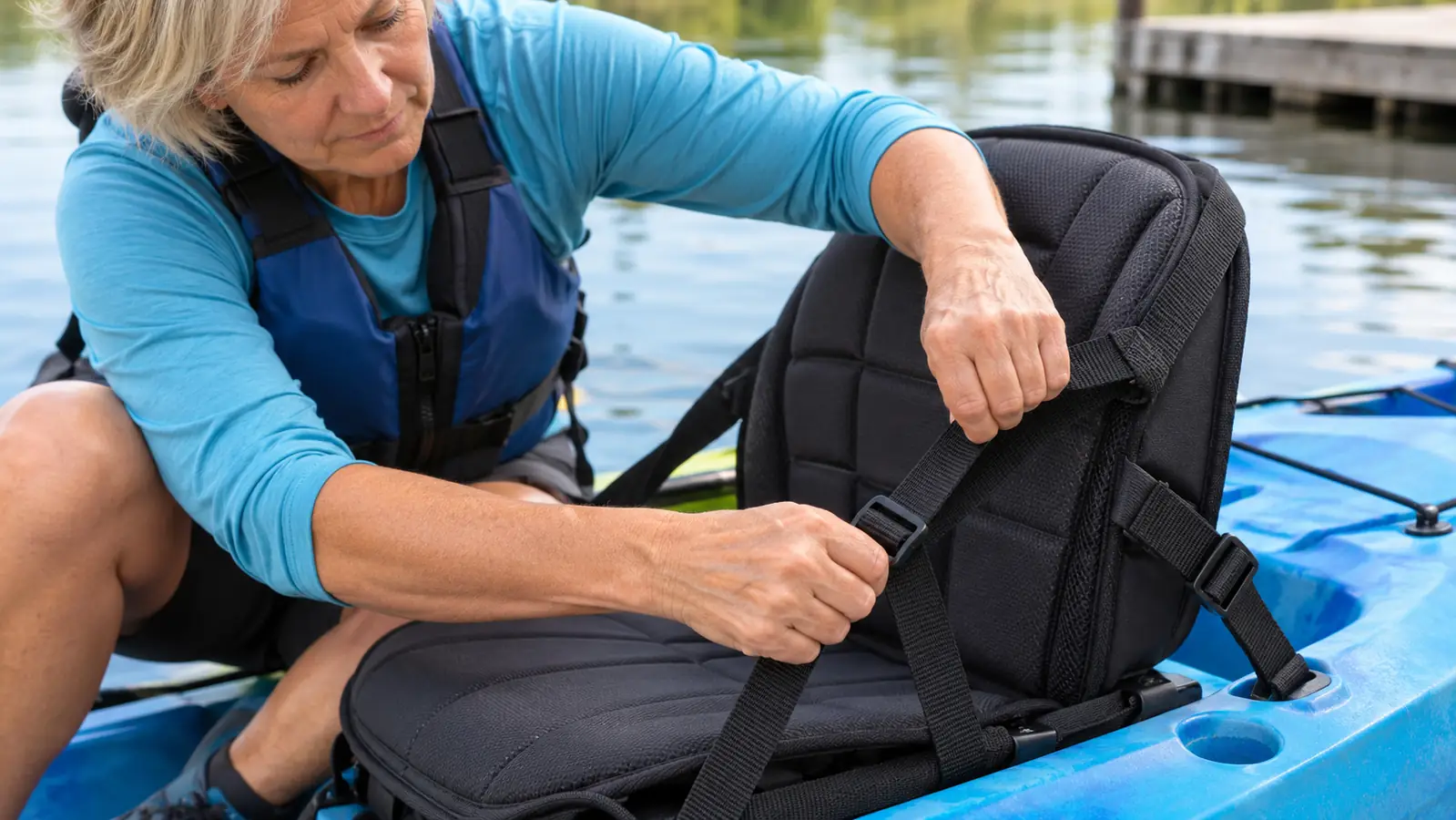
In August 2025 I bought a Pactrade Marine padded kayak seat with a backrest, with my own money on Amazon the way I buy everything, one item at a time and after a good deal of reading. I am not a guide and not an instructor. I am 58 years old with the ordinary stiffness that comes with it, and I wanted to stay out longer than an hour. That was the whole goal.
I have used it on every trip since, strapped to the four strap points on my deck, through the rest of that season and this one. What follows is what changed, what did not, and the two small irritations I would want a friend to tell me about before she spent her money.
The difference between an hour and an afternoon
One padded seat with a backrest is the only change I made that kept me on the water past the point where my back used to quit.
Amazon Check Today's Price on Amazon →The Pactrade Marine seat itself is a padded cushion and a padded backrest, and the backrest is the part that matters. It has a non-slip contoured surface with some give to it, and the whole thing is listed at 3.4 pounds, so it adds nothing I notice on the walk down. The cushion is about 15.74 inches across and 12.59 inches deep, and the back section is 18.5 inches tall. I am 5 foot 5 and medium build, and I sit inside those numbers comfortably instead of perching on the edge.
It attaches with four adjustable webbing straps, two at the front and two at the rear, with buckles on the back of the seat. My deck has four strap points and the straps reached all of them without me rigging anything extra. The first time I put it on I spent a couple of minutes in the parking lot getting the four of them even, and I have not had to fuss with it since. It goes on in the lot, comes off at the truck, and gets rinsed with the hose along with everything else.
The back carries a detachable storage bag that holds about 4.5 inches worth of items. Mine holds sunscreen and a spare hat, which is exactly the sort of thing that used to roll around under the deck bungee. It is not a dry bag and I do not treat it like one. My phone and keys ride in the dry bag clipped to a deck strap point, same as always.
The foam pad made the plastic less hard. It did nothing about the fact that there was nothing behind my back.

Here is the part I would want to know. The straps loosen a little. Not enough that anything has come apart and not enough that I have ever felt unsafe, but after the first half hour I usually reach behind me and give the rear straps a tug to get things snug again. It is a small habit now, like adjusting a mirror. If you want gear you never touch after setup, that will annoy you.
The padding stays damp too. The Pactrade Marine seat dries overnight in the garage and it is fine by the next trip, but if I paddle in the morning and want to go out again the same afternoon, it is still a little cool against my back. I rinse it, set it on the shelf above the workbench, and leave it alone. No sprays, no treatments, nothing special.
The comparison worth making is with the foam pad, because that is what I actually gave up. The kneeling pad made the plastic less hard. It did nothing about the fact that there was nothing behind my back, so I was still holding myself up with my lower back muscles for the whole trip. Sheila, who is 60 and has paddled longer than I have, sat in my kayak at the ramp one morning and said the backrest was the difference, and she was right.
What I notice now is that I stop thinking about it. I paddle to the far bank, I turn around when I feel like turning around instead of when my back tells me to, and I get back to the ramp with something left. That is not a dramatic result. It is the result I was after.
What I'd Tell You If We Were Sitting at My Kitchen Table
I would tell you to check your deck first. Count the strap points before you order, because the seat needs four and mine had them. I would tell you to put it on at the truck in the parking lot and take the time to get the four straps even before you carry the boat down, because doing it at the water with the kayak sliding around is a nuisance. And I would tell you plainly that the Pactrade Marine seat is a comfort item, not a safety item. It did not make me a better paddler and I would not want anybody to think it did.
I would also give you the honest limits. It is 3.4 pounds on a 50 pound kayak, so weight is not the issue, but it is one more thing to rinse and dry. The straps want a tug. The padding wants a night in the garage. If you paddle an hour at a time and you are comfortable, you may not need this at all, and I would rather say so than sell you something. If you are turning around early the way I was, it is the simplest fix I found.
If your back decides when the trip ends, start here
Four straps, a padded backrest, and a storage bag for the sunscreen. That is the entire upgrade that got me past the first hour.
Amazon Check Today's Price on Amazon →