

Short answer first, because that is the thing I could not find when I was shopping: a padded kayak seat with a backrest does more for a tired lower back than a flat foam pad. It also weighs more, asks you to clip and tighten four straps every launch, and holds water in the padding overnight. A foam pad does one job and never needs adjusting. Which one belongs on your deck comes down to how long you stay out and how much your back complains when you turn around.
I am Joanne Tolliver, 58, retired from dispatching school buses for the county, and I live in Radford, Virginia. I paddle a used 10 foot sit-on-top, about 50 pounds, that I bought from a neighbor the spring I retired. Claytor Lake and the calm stretch of the New River, twice a month, April through October, daylight only. My first summer I sat on the kayak's bare molded seat with a folded garden kneeling pad under me. In August 2025 I bought the Pactrade Marine padded seat with the backrest and the four adjustable straps. Both have been under me on that same deck.
Here is the honest summary before the details. The seat with the backrest won on the water. The foam pad won in every other category. It is lighter on the walk down, it takes no setup, and it dries before I have finished loading the truck. I kept the pad in the garage as a spare and I do not expect to go back to it.
| Pactrade Marine padded seat | Folded foam pad | |
|---|---|---|
| Back support | Padded backrest you can lean against, held by two rear straps | None. The pad lies flat on the molded seat. |
| Cushion under you | Foam and neoprene cushion built into the seat | A garden kneeling pad folded to fit the seat well |
| Weight on the walk to the ramp | 3.4 pounds | A few ounces |
| Setup at the ramp | Four adjustable webbing straps with buckles, front and rear | Set it on the deck and sit down |
| Fiddling mid-trip | Rear straps loosen a little and need a tug after the first half hour | Nothing to tighten, though it can work forward under you |
| Storage for small gear | Detachable bag on the back that holds about 4.5 inches of items | No storage, the pad is flat |
| Drying after a rinse | Padding stays damp until the next day | Shaken out and hung on a nail, dry by supper |
| Time before the back complains | Most of a normal trip | About an hour, then I turned around |
| Fit to the deck | Universal fit, clips to the four deck strap points | Lies wherever you put it, no attachment |
| Best for | Paddlers who feel it in the lower back after an hour | Short paddles, a spare seat, or a cheap first try |
Where the Padded Seat Wins
The backrest is the whole reason I spent money, and it is the whole reason I still use it. The seat measures 18.5 inches in height, 15.74 inches wide and 12.59 inches deep, and the back portion gives you something solid to lean against on the flat water between the ramp and the far cove. On the bare molded seat there was nothing behind me but air. My lower back did the work of holding me upright for two hours, and it let me know about it. With the Pactrade Marine backrest behind me I can sit back and let the seat carry some of that.
The second thing it changed was the turn-around. On the folded kneeling pad my lower back got stiff after about an hour and I turned the kayak around, whether I wanted to or not. That makes for a short trip when the launch walk alone is a couple hundred yards down a gravel path and grass to a concrete ramp. With the padded seat under me I finish the loop I planned and I am not in a hurry to get off the water. Nothing about my back changed between those two summers. The seat changed.
The straps are the part I expected to resent and they are the reason the seat stays where I put it. Four adjustable webbing straps, front and rear, with buckles on the back of the seat, clip to the four strap points on my deck. Once they are set, the seat does not slide when I push off the ramp or shift my weight to reach behind me. A loose pad walks out from under you by the second hour. This one stays.
The detachable bag on the back holds about 4.5 inches worth of items, which in my case is sunscreen, a spare hat, and the sandwich that used to ride up front under my knees. It is not a dry bag and I would not treat it like one. My phone still goes in the roll-top bag clipped to a deck strap point. But it keeps the small things behind me instead of under me, and that turned out to matter more than I expected.
Where the Foam Pad Wins
Weight and setup, and it is not close. The seat is 3.4 pounds. The pad is a few ounces. That does not sound like much until you are carrying a 50 pound kayak, a paddle, a vest and a dry bag down that gravel and grass path by yourself. And the pad has no straps at all. You set it on the deck and sit down. The seat needs four buckles clipped and four straps snugged, and on a chilly April morning with stiff fingers that is a genuine chore at the top of the ramp.
The pad also never needs a mid-trip adjustment. My seat straps loosen a little and the rear ones want a tug after the first half hour. Webbing stretches, that is all it is, but it is still a thing you do while sitting on open water with a paddle across your lap. Set against that, the pad has its own bad habit. It works forward when I push my feet into the footwells, and I have had to lift a hip and pull it back under me. So the pad is not maintenance free either. It is a different kind of maintenance.
The drying is the one that surprised me. I rinse everything with the garden hose after a trip, the same way I do the paddle and the vest, and the seat padding stays damp until the next day. Foam and neoprene hold water and my garage is not air conditioned. The pad gets shaken out, hung on a nail by the door, and it is dry by supper. If I paddled on back to back days I would notice the damp padding more than I do at twice a month.
And the last point, which is the practical one. The pad was already in my garage. It was kneeling padding for the flower beds before it was kayak seating. If you own a sit-on-top with a molded seat, you may already have everything you need to find out whether a backrest is worth chasing, and you can find out on your next trip for nothing.
If your lower back is what makes you turn around an hour early, this is the seat that fixed that for me
Four adjustable webbing straps clip to the deck points, the padded backrest sits behind you where the molded seat leaves air, and the bag on the back holds the sunscreen and the spare hat. Rated 4.5 from 761 reviews.
Amazon Check Today's Price on Amazon →Setting It Up the First Time
The first setup took longer than the paddling. I clipped the two front straps to the forward deck points, then reached behind me for the two rear straps, which is a job best done standing beside the kayak rather than from the seat. Then I sat down, tightened everything, got off, tightened again, and got back on. That took me about ten minutes at the ramp. Now it takes about as long as putting the vest on, maybe a minute, because the straps stay where I set them from trip to trip.
The fit is listed as universal, and on my deck that held true. The four strap points on my kayak line up with the four straps on the Pactrade Marine seat without any drilling or added hardware. What I would tell you is to sit in it before you push off and tighten the rear straps last, because that is the pair that decides whether the backrest sits upright or leans you backward. Mine sat too far back the first trip and I fixed it at the ramp in about thirty seconds.
The Damp Padding Problem
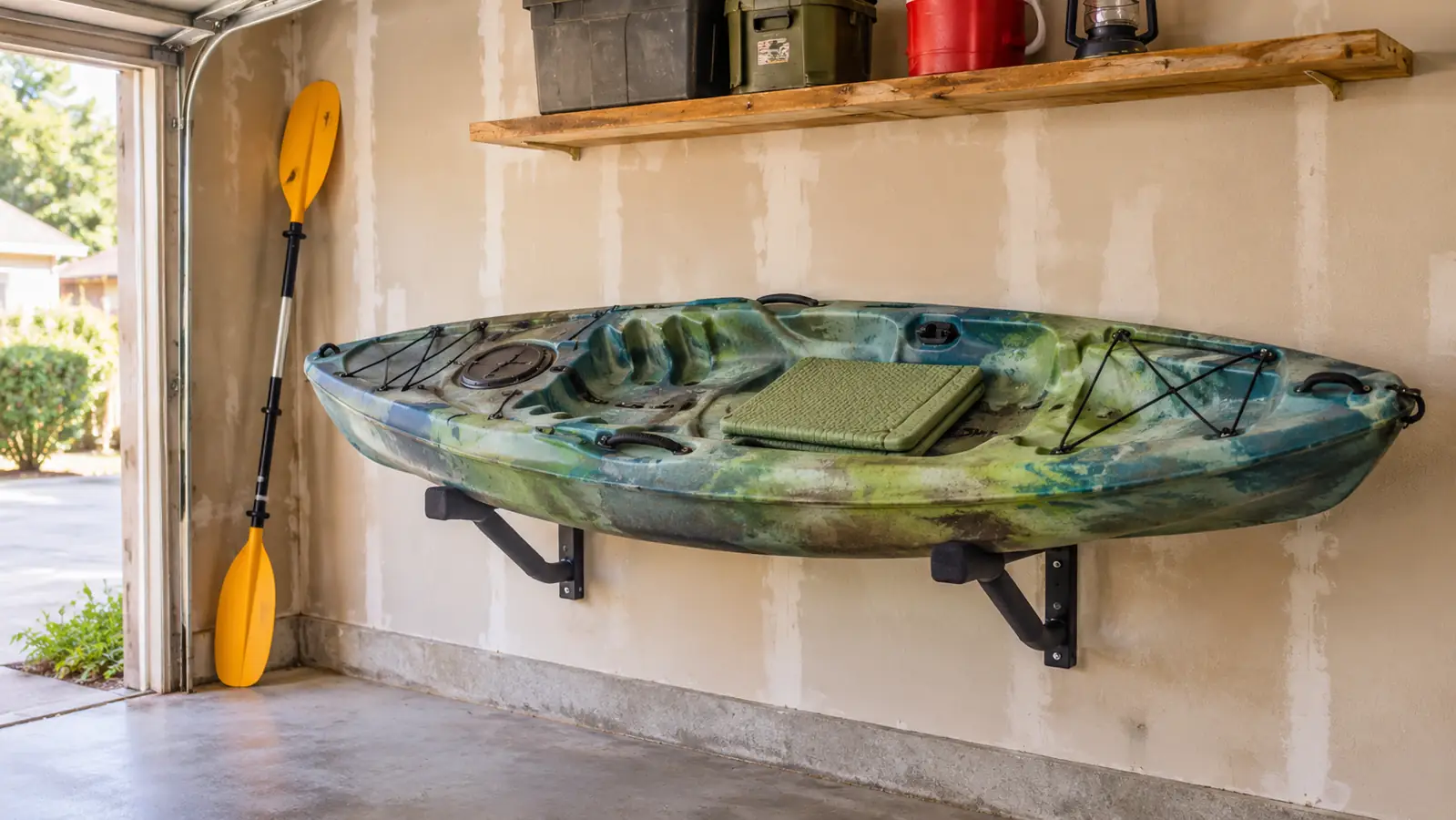
Nobody warns you that a padded seat is a wet object. Mine comes home damp every time, even on a dry day, because the cushion picks up water off the deck and off me. It lives on the shelf above the workbench in the garage, on top of a folded towel, and the towel is damp the next morning. The pad never did that. The pad went on a nail and was forgotten until the next trip.
My fix is not clever. I hang the seat over the edge of the shelf with the backrest open rather than folded flat, and I leave it there until the following evening. If I know I am paddling two days running, I bring it inside the house overnight instead of leaving it in the garage. That is the whole routine. It is one extra thing to think about, and it is the price of the backrest as far as I am concerned.
On the folded pad I turned around after about an hour. On the seat I finish the loop I planned and I am not in a hurry to get off the water.
What Neither One Fixes
A seat is not a posture lesson. Neither one of these stops you from slumping forward over the paddle after two hours, and neither one gets you out of the boat. I still stop in a cove, put the paddle across the deck, and stand up in the shallows for a minute or two on longer mornings. That break does more for my shoulders than anything under me. A seat helps with the lean back. It does not help with the lean forward.
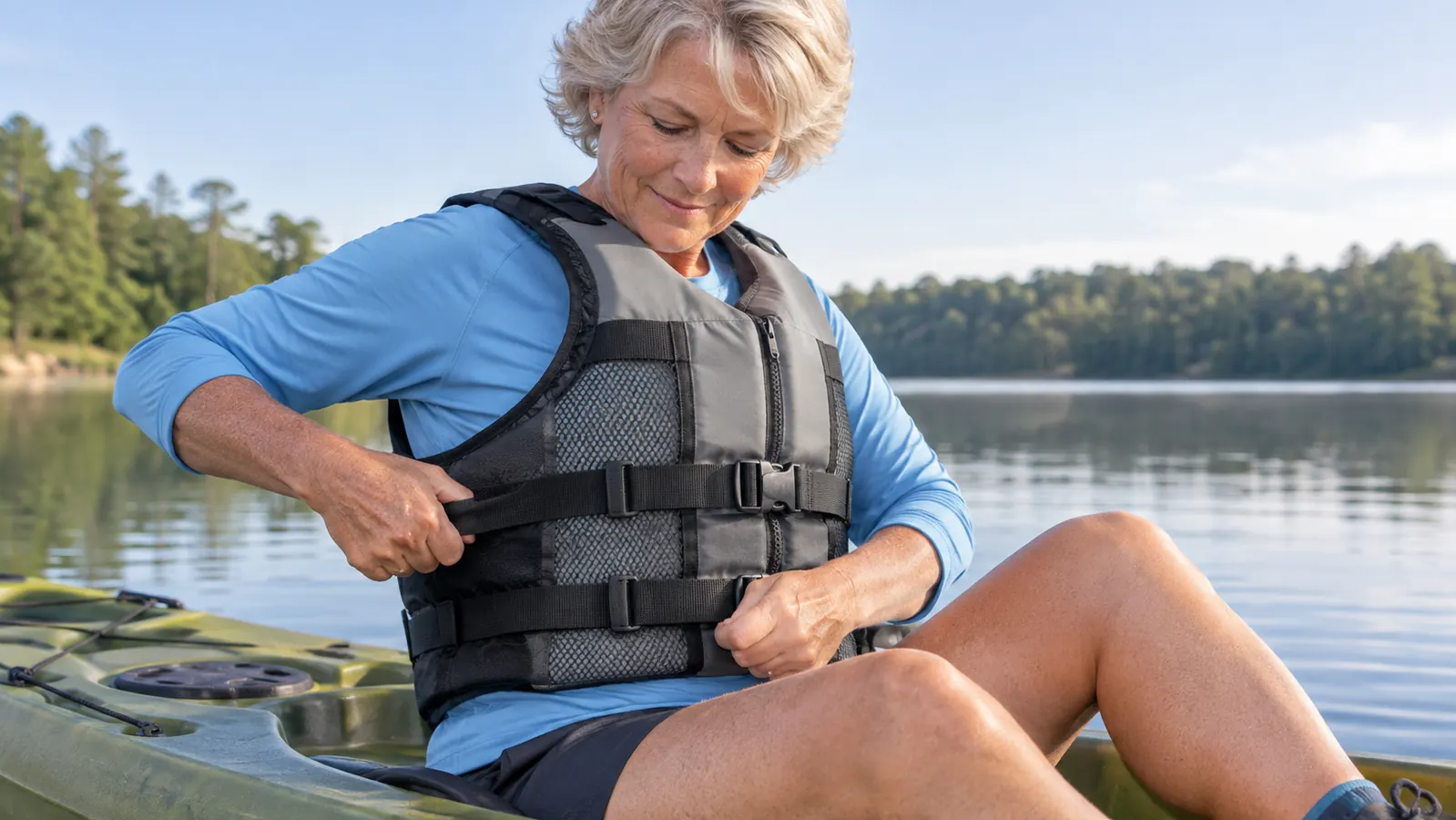
Neither one fixes a life jacket that pushes into the seat either. My old blocky foam jacket used to ride up against whatever was behind me, which is why I took it off on hot days and stowed it under the deck bungee. That habit ended when I bought the mesh back vest, not when I bought the seat. If your back is genuinely troubling you rather than just stiff after an hour of sitting on plastic, ask a doctor. I am not an instructor and I am not qualified to tell you otherwise.
Who Should Buy Which
Buy the padded seat with the backrest if you are out for two hours or more, if you paddle alone, and if the thing that ends your trips early is a lower back that stiffens up before you are ready to quit. The Pactrade Marine seat has held up over a full season and a bit, the straps are still sound, the buckles still clip, and the bag on the back has become part of how I pack. I would also say buy it if you have a sit-on-top with four deck strap points and nothing else behind you, because that is exactly the boat this thing was made for.
Stay with a foam pad, or start there, if your trips are an hour or so, if you mostly fish from a stopped position and shift around a lot anyway, or if the walk from the lot to the water is the part of the day you dread. The pad costs you nothing if you already own one, it never needs a strap tightened, and it never comes home wet. What it will not do is hold your back up. That is the trade, and now you know which side of it you are on.
One padded seat, four straps, and a backrest where your molded seat leaves air
About 3.4 pounds on the walk down. It clips to the four deck strap points on a sit-on-top and the storage bag on the back holds the small things you have been sitting on. I wish I had bought it two summers sooner.
Amazon Check Today's Price on Amazon →