
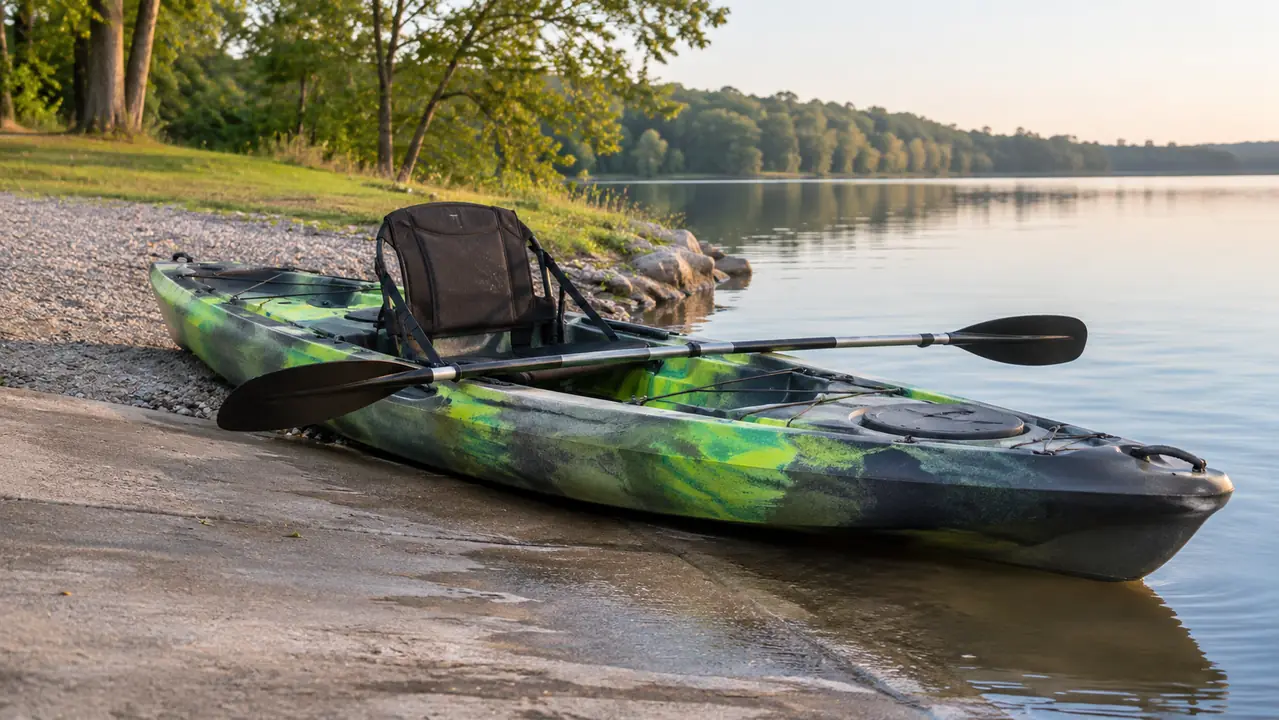
An hour into a paddle, my lower back would go stiff and I would start hunting for a reason to turn around. That was the whole problem. Not the kayak, not the paddle, not the wind coming up the lake. I was sitting on a folded garden kneeling pad laid over the bare molded seat of a used ten foot sit-on-top, and somewhere around the sixty minute mark that arrangement quit working and no amount of shifting fixed it.
I bought the Pactrade Marine padded kayak seat with the detachable storage back in August 2025, and it has gone on every trip since. I am 58, retired from dispatching school buses for the county, and I paddle Claytor Lake and the calm stretch of the New River near Radford about twice a month from April through October. I am not an instructor and I am not going to pretend I understand hull design. What I understand is what fifteen months of sitting on the same thing teaches a person, and that is what follows.
The Quick Verdict
It ended my one hour turnaround. The front straps want a tug at the half hour mark and the padding needs a night in the garage to dry, and I would buy it again without thinking about it.
Amazon Check Today's Price →The seat that got me past the hour mark
Padded backrest, four adjustable webbing straps, and a detachable storage back that holds sunscreen and a spare hat. Mine has been strapped to the same kayak since August 2025.
Amazon Check Today's Price on Amazon →How I've Used It
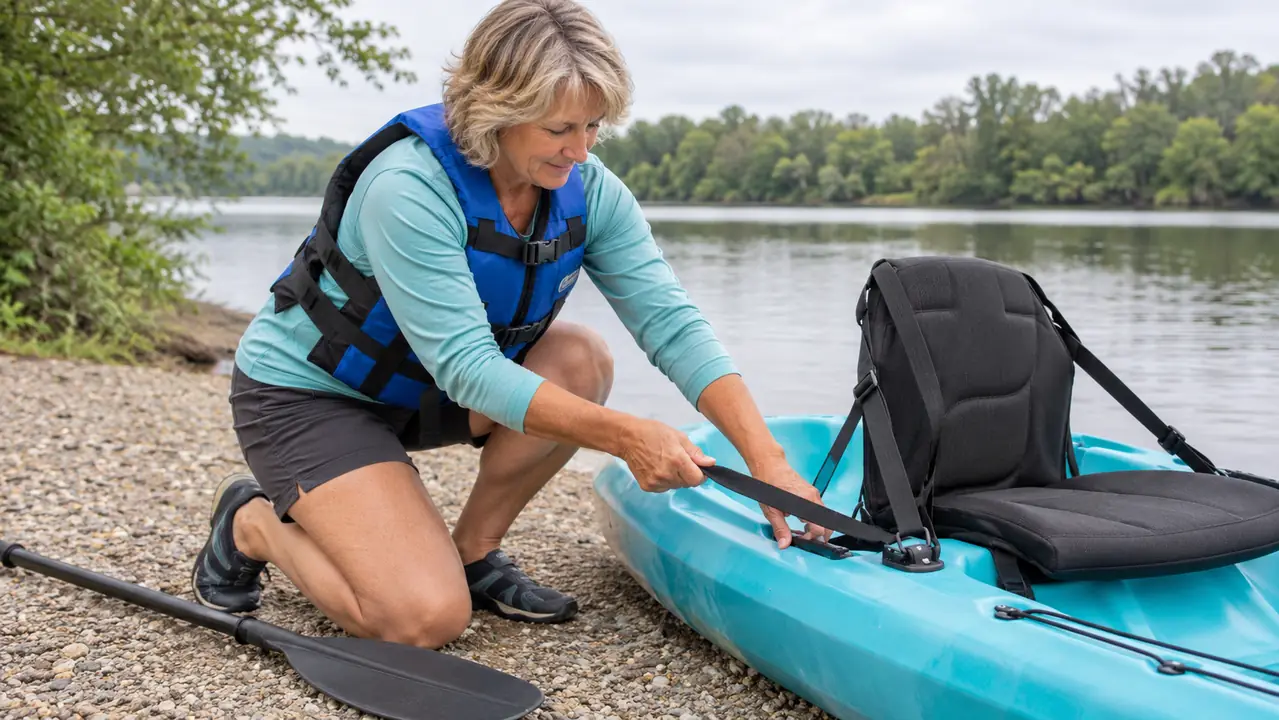
The Pactrade seat attaches to the four strap points on my deck with four adjustable webbing straps, two forward and two behind, and the buckles sit on the back of the seat where I can reach them while standing in six inches of water. Setup takes me about two minutes at the ramp. I do it before I put my vest on, because bending over a deck with a vest on is a young person's game.
The first trip with it was a Saturday morning in August 2025, and I made the mistake of setting it up after I already had my vest on. The rear straps went on fine. The front ones cost me five minutes of leaning over the deck with a life vest in my way, and I said a few things I would not repeat in church. Now the seat goes on first and the vest goes on second, and the whole job is about two minutes if I am not rushed. Having the buckles on the back of the seat is what makes that possible, since I can pull a strap tight standing beside the kayak instead of kneeling in the water.
My routine has not changed since the day I brought it home. The seat rides in the truck bed beside the kayak on the way out. I park in the gravel lot, put the vest on, set the kayak on the cart, and roll everything down the couple hundred yards of gravel and grass to the concrete ramp. Then the seat goes on, the paddle goes across the deck, the dry bag gets clipped to a strap point, and I am gone.
That walk is the part I did not think about when I bought a seat. It means the seat comes off the kayak and goes in the truck bed, not in a bag slung over my shoulder, because I already have both hands full rolling a fifty pound kayak down a hill. It weighs 3.4 pounds, so it is not a burden, but it is one more thing to carry and set down and pick up.
After every trip it gets rinsed with the garden hose and left to dry in the garage. Nothing else. No sprays, no conditioners, no scrubbing. It sits on the shelf above the workbench between trips, and it has held up fine. I am not gentle with gear, but I am also not hard on it. It gets wet, it gets rinsed, it gets put away.
What You Actually Get
The Pactrade seat is 3.4 pounds, 15.74 inches wide across the cushion, 12.59 inches deep, and the backrest stands 18.5 inches tall from the base. That is about the footprint of a small cushion and the height of a proper chair back, which is a bigger package than it sounds like when you read it on a screen. The cushion and backrest are foam under neoprene, with polyethylene in the build under the seat pan so it does not fold up on you when you sit down. This is not a thin pad. It is a seat, and it takes up real room on the deck.
The backrest surface is contoured and textured so you are not sliding around on it, and the padding is thick enough that I can feel it through a wet swimsuit. Four adjustable webbing straps run from the seat to the deck, front and rear, with the buckles mounted on the back of the seat for adjustment. The strap ends clip on with brass hardware. That is the whole installation. Nothing to drill, nothing to glue, nothing to inflate.
The detachable storage back is the part I did not expect to use. It holds about four and a half inches of items and it comes off the seat when you want it off. I keep sunscreen and a spare hat in mine. I do not treat that bag as a dry bag, though. Anything that has to stay dry goes into my roll top bag clipped to a deck point, and the seat bag is for the soft, forgiving items. That division of labor has worked for fifteen months and I would not change it.
On the water the storage back sits behind the backrest, which means it is not under my legs and not in the way when I climb aboard. I have never once taken it off while afloat. I take it off at home when I rinse the seat, because the seat dries faster with the bag out of the way, and it goes back on with no fuss at all. The bag is cloth, not sealed, so a splash that comes over the side will find it. That is exactly why the sunscreen and the spare hat live there and anything that matters lives somewhere else.
One thing about the weight: 3.4 pounds does not sound like much until you are lifting it out of a truck bed at the end of a long morning with a stiff back. I lift with both hands and set it on the tailgate first, then slide it onto the shelf when I get home. That is not a complaint about the seat. It is just what a real seat weighs compared to a folded pad.
Comfort Over Two Seasons
Here is the honest version of what changed. The folded kneeling pad gave me something soft to sit on. It did nothing about the fact that I was slumping forward for an hour. The backrest on this seat gives me something to lean against, and that is the piece I had been missing. I sit up straighter without thinking about it, and my lower back does not start complaining at the same point in the trip.
I am not going to tell you it fixed my back. I am 58 and I have the ordinary stiffness that comes with that, and I have never seen a doctor about it. What I will tell you is that a loop around my part of the lake used to end because my back quit, and now it ends because I am done and it is time to head in. Those are different things, and the second one is a great deal better.
There was one Sunday last June when the water was so flat I went further than I normally do, out past the point and up the river stretch where the trees come right down to the bank. Two and a half hours of mostly sitting, more than I had done in years. I got out at the ramp stiff in the legs the way anybody does after that long, but my lower back was not the thing that made me quit. On the old pad I would have turned around at the hour mark without even thinking about it.
There was a morning last September, flat water, no wind at all, the kind of day where you can hear somebody talking across the lake. I paddled out past the point and back and never once shifted my weight to find a comfortable spot. Nothing remarkable happened. I just did not hurt.
Sheila, who has paddled with me for years, sat in my kayak once at the launch while I was walking up for the truck and told me it felt like a proper chair. She did not say it kindly, either. She said it like a person annoyed to be impressed.

The Two Things That Annoy Me
The front straps loosen a little. Not dramatically, and not all at once, but by the half hour mark the seat has settled and I can feel it. I reach down and give each front strap a tug, and that is the end of it for the rest of the trip. I have started doing it out of habit before I push off, which mostly solves the problem. I do not call it a defect so much as the nature of webbing that gets wet and takes load.
The second thing is drying. The padding stays damp overnight and sometimes into the next day. I rinse it, I set it on the shelf, and it is still cool and wet in the middle the following morning. Nothing has come of it and it has never gone musty, but if you are the kind of person who needs gear dry and put away the same evening, this will bother you. I leave it where air gets at both sides and it is fine by the next afternoon.
That is the full list. Two gripes in fifteen months, and neither one has cost me a trip. I have owned things that gave me a longer list in a week.
What I Liked
- The backrest holds me upright for a whole paddle, which the folded pad never did
- Four adjustable straps with buckles on the back of the seat make setup a two minute job at the ramp
- The detachable storage back swallows sunscreen and a spare hat without adding another bag to the deck
- Foam and neoprene padding is thick enough to feel through a wet swimsuit
- Rinses with a hose and has gone two full seasons with no repairs
Where It Falls Short
- The front straps loosen by the half hour mark and want a tug
- Padding stays damp overnight and needs air on both sides
- At 3.4 pounds it is a real seat, not a thin pad you tuck under a bungee
- The storage back is for forgiving items only; anything that must stay dry needs its own bag
The pad gave me something soft to sit on. The seat gave me something to lean against, and that turned out to be the entire difference.
Who This Is For
This is for the paddler who is comfortable for the first half hour and then starts fidgeting. If your back is the reason your trips are shorter than you want them to be, and you have already tried a pad or a towel or a folded jacket with no luck, the backrest is the piece you are missing. It is also for anyone who wants sunscreen and a spare hat within reach instead of stuffed behind a deck bungee.
The Pactrade Marine seat suits a recreational sit-on-top with four deck strap points, which is what I have, and it suits someone who does not mind two minutes of setup at the ramp. The hardware is simple and it does not ask anything of you except a rinse and a strap tug. I bought mine with my own money, one item at a time, about what a tank of gas costs, and I have not had to replace a thing.
People ask me about it at the ramp more often than I expected, usually somebody in my age range eyeing the bare molded seat on their own kayak. My answer is always the same and it is not a sales pitch. It is a seat. It does the thing a seat does, and it will not make you a paddler. What it will do is stop the clock that used to run out at the hour mark.
If you paddle with a partner and swap kayaks, this is easy to move between boats, because the straps come off the same way they go on. I have never needed to, since I only have the one kayak, but I would not hesitate to hand it to Sheila for an afternoon.
Who Should Skip It
If you have a real back problem, see a doctor before you buy a seat on the internet. I am a retired bus dispatcher with ordinary stiffness, not a medical case, and a padded backrest is not treatment for anything. It is a cushion with a back on it. That is all it is, and it is enough for me, and it may not be enough for you.
Skip it if you want something you can fold flat and forget about, because it is 3.4 pounds and it lives on the deck. Skip it if your kayak has no strap points, because the four straps are the entire mounting system. And skip it if a strap tug at the half hour mark is going to ruin your morning, because that is going to happen whether you like it or not.
One last thing, and I mean this for anyone new to this. Whatever seat you end up with, put your vest on in the parking lot before you unload, and keep it on the whole time you are on the water. I have done that since the day I bought my vest and I am not going to stop. A comfortable seat is a nice thing. Getting home is the point.
Fifteen months, two gripes, and I would buy it again
If your paddle ends when your back quits instead of when you are ready to go home, this is the simplest fix I have found. Mine has been on the same kayak since August 2025.
Amazon Check Today's Price on Amazon →